2026 Maruti Suzuki Baleno Facelift: Everything a Buyer Needs to Know Before It Launches
The 2026 Maruti Suzuki Baleno facelift is coming in April–May 2026 with a sunroof, bigger touchscreen, and possibly ADAS. If you’re currently deciding between a Baleno and an i20 or Altroz, here’s a clear-eyed breakdown of whether you should wait — or buy now.

Should You Wait for the Baleno Facelift or Buy the Current Baleno Now?
This is the real question most buyers reading this article have. So let’s answer it first.
Wait if:
- You don’t need a car urgently (launch is just 4–6 weeks away)
- A sunroof matters to you — the current Baleno doesn’t have one; the facelift almost certainly will
- You’re comparing the top-spec Alpha variant against the i20 Asta(O)
Buy now if:
- Your dealer is offering a good discount on the current model (expect ₹20,000–₹50,000 off as the facelift approaches)
- You need delivery before May 2026
- You primarily want CNG — the powertrain is not changing
What’s Actually Changing: Confirmed vs. Rumoured
One thing that frustrates buyers is articles that mix confirmed details with speculation without being clear about which is which. Here’s an honest breakdown.

Confirmed (Based on Spy Shots + Bharat NCAP Data)
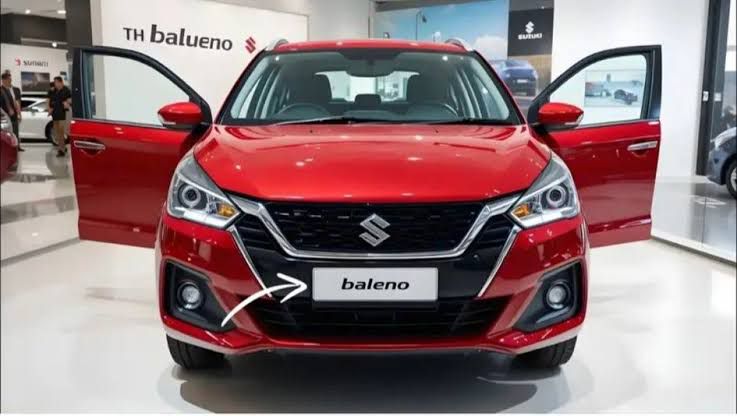
- New front fascia — spy shots clearly show a revised grille and updated headlamp cluster with redesigned DRLs
- Revised rear lamps — visible changes to the tail lamp design in test mule footage
- Same 1.2-litre DualJet petrol engine — 89 bhp, 113 Nm; no mechanical changes confirmed
- Six airbags standard across all variants — already standardised in 2025, will carry over
Highly Likely (Based on Segment Competition)
- Electric sunroof — this is the single most-requested missing feature. Every rival — the i20, Altroz, and even the sub-₹8 lakh Grand i10 Nios — has it. Maruti cannot ignore this any longer.
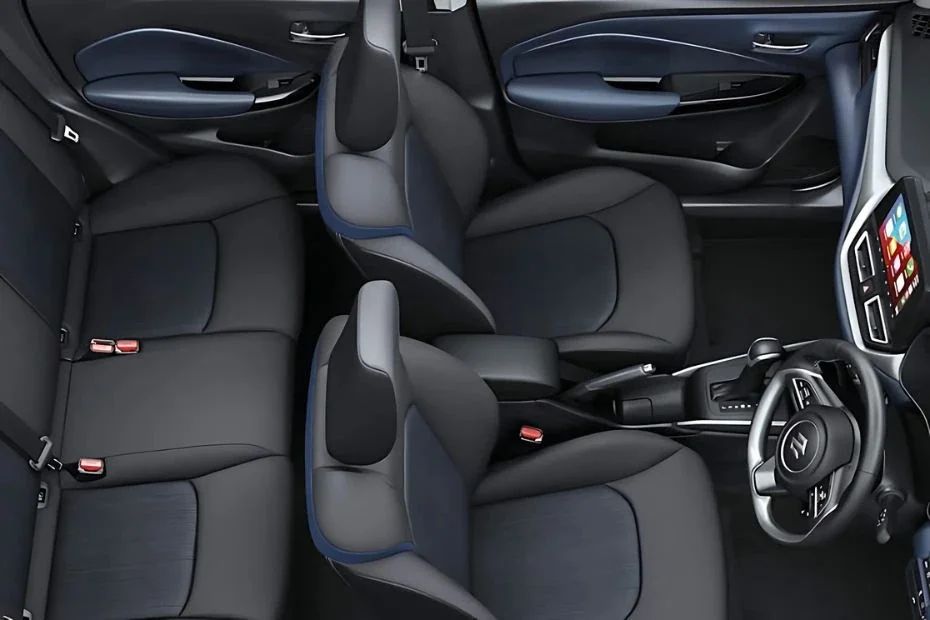
- Larger SmartPlay Pro+ infotainment screen — the current 9-inch unit is showing its age; a 10.25-inch floating unit (like in the Fronx) is expected
- Wireless Apple CarPlay and Android Auto — wired connectivity feels dated at this price point
- Fully digital instrument cluster — visible in partially uncamouflaged interior shots
Possible But Unconfirmed
- ADAS (Advanced Driver Assistance Systems) — the Honda Amaze already offers this under ₹10 lakh. Maruti has been slower to adopt it, but the top Alpha trim is a candidate
- 360-degree camera — possible on higher variants only
- Ventilated front seats — would be a segment first at this price; considered unlikely for launch but possible
- Maruti’s in-house series-hybrid powertrain — purely speculative at this stage; designed primarily for the Fronx facelift
How the 2026 Baleno Facelift Compares to Rivals Right Now
Here’s how the expected facelift stacks up against its two biggest competitors in the premium hatchback space:
| Feature | Baleno Facelift (Expected) | Hyundai i20 | Tata Altroz |
|---|---|---|---|
| Starting Price | ~₹6.5 lakh | ₹7.04 lakh | ₹6.59 lakh |
| Sunroof | ✅ Expected | ✅ Yes | ✅ Yes |
| ADAS | Possible (top trim) | ✅ Yes (Asta O) | ❌ No |
| Digital Cluster | ✅ Expected | ✅ Yes | ✅ Yes |
| Wireless CarPlay | ✅ Expected | ✅ Yes | ✅ Yes |
| CNG Option | ✅ Yes | ❌ No | ❌ No |
| After-Sales Network | ✅ Strongest in India | Good | Good |
| NCAP Rating | 4 stars (Bharat NCAP) | 3 stars (Global NCAP) | 5 stars (Bharat NCAP) |
What this tells us: The facelift is clearly designed to close the feature gap, not leapfrog the competition. It should land as a well-rounded package — especially if priced right.
Expected Price: Variant-Wise Estimate
The current Baleno is priced between ₹5.99 lakh and ₹9.33 lakh (ex-showroom). The facelift is expected to carry a modest ₹15,000–₹30,000 premium over these prices.
| Variant | Current Price | Expected Facelift Price |
|---|---|---|
| Sigma (base) | ₹5.99 lakh | ~₹6.15–6.30 lakh |
| Delta | ₹6.66 lakh | ~₹6.85–7.00 lakh |
| Zeta | ₹7.53 lakh | ~₹7.70–7.90 lakh |
| Alpha (top) | ₹9.33 lakh | ~₹9.50–9.80 lakh |
All prices are estimated ex-showroom. On-road prices will vary by city — India buyers should add approximately ₹1.2–1.5 lakh for registration, insurance, and handling charges on the mid variants.
Also read: 2026 Honda CBR150R Gets a Bold New Avatar — Better Than Before?
The Baleno’s Track Record: Why It Still Sells
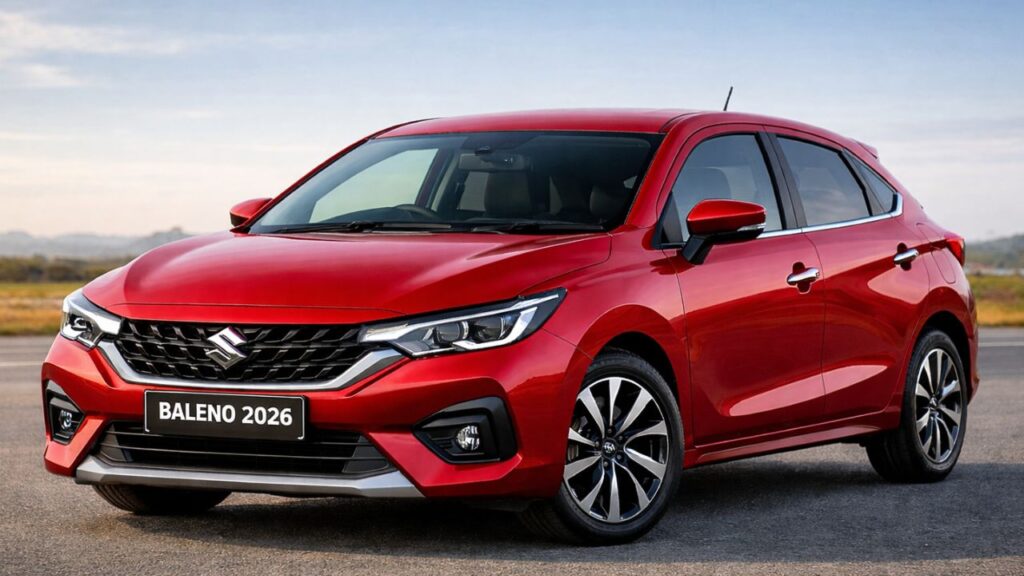
Even with the anticipation of the facelift building, the current Baleno sold 14,632 units in February 2026 — a strong number despite a 5.5% year-on-year dip. That dip is almost certainly facelift anticipation at work, not loss of confidence in the car.
The Baleno has outsold the i20 and Altroz consistently for years. The reasons are straightforward: Maruti’s Nexa service network is genuinely superior in smaller cities and towns, resale value holds up extremely well, and the 1.2-litre petrol engine is one of the most reliable in its class.
For buyers outside metro cities — particularly in Rajasthan, UP, and MP — the Nexa service advantage is a real, practical benefit that no comparison chart fully captures.
One Thing to Watch Out For
A common mistake buyers make around facelift launches: they assume all features come on all variants. They almost certainly won’t. Based on Maruti’s typical variant strategy:
- The sunroof is likely to be available from the Zeta variant upwards — not the base or Delta
- ADAS, if it comes, will almost certainly be Alpha-only
- The digital cluster may be restricted to Zeta and Alpha
If you want all the new features, budget for the Zeta or Alpha. The base and Delta variants will look refreshed but won’t feel dramatically different inside.
Our Honest Take
The 2026 Baleno facelift looks like a competent, necessary update — not a revolution. Maruti has identified the exact features buyers were complaining about (sunroof, larger screen, digital cluster) and appears to be addressing them directly. If the pricing stays within ₹15,000–₹30,000 of the current model, it will be hard to argue against it in the premium hatchback space.
The only real wildcard is ADAS. If Maruti includes even basic lane departure warning and automatic emergency braking on the Alpha, the facelift becomes an outright winner. If they skip it, the Tata Altroz — with its superior NCAP rating — remains a serious alternative for safety-conscious buyers.
We’ll update this article the moment the official launch happens with real variant pricing and confirmed features.
Also read: Honda CBR150R 2026 Gets a Bold New Avatar — Better Than Before?
FAQs
When is the 2026 Baleno facelift launching in India?
The facelift is expected to launch in April or May 2026 through Maruti Suzuki’s Nexa dealership network. No official date has been confirmed yet.
Will the engine change in the facelift?
No. The 1.2-litre DualJet petrol engine (89 bhp, 113 Nm) and the CNG option (76.4 bhp, 98.5 Nm) are both expected to carry over unchanged.
Should I negotiate a discount on the current Baleno?
Yes. With the facelift weeks away, dealers are motivated to clear current stock. You can reasonably negotiate ₹20,000–₹40,000 in discount or additional accessories on the outgoing model.
Will the facelift get a sunroof?
Almost certainly yes — spy shots and segment pressure from the i20 and Altroz make this a near-certain addition. It is likely to be limited to Zeta and Alpha variants.
Is the Baleno facelift better than the Hyundai i20?
On paper, they’ll be closely matched. The Baleno has the edge in after-sales network and resale value; the i20 currently leads on ADAS and has a more premium interior feel. Wait for our full comparison once both cars are officially available.