Hyundai Bayon : A New Electric Compact SUV Set to Shake India by March 2027 – Tata Nexon EV in Trouble?
Let’s be honest — the Indian SUV market has been Tata’s playground for a while now. The Nexon EV practically owns the compact electric SUV space, the Punch EV is flying off lots, and Tata is laughing all the way to the bank. But Hyundai? Hyundai has been quietly sharpening its knives. And now, word is out — the Hyundai Bayon India launch is inching closer, and right alongside it comes a brand-new, fully localised electric compact SUV that has Nexon EV written all over its target sheet.
Two new nameplates. One financial year. Hyundai means business.
What Exactly Is Coming — The Hyundai Bayon India Launch, Explained
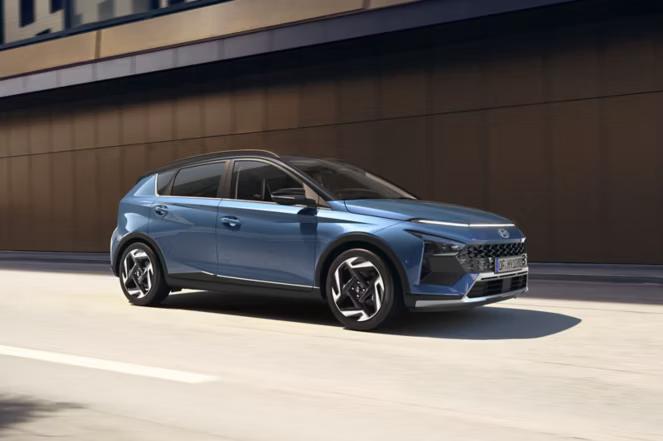
If you haven’t been following the BC4i saga, here’s the short version. Hyundai India CEO Tarun Garg recently confirmed — straight from the FY25-26 investor presentation — that the company will launch two completely new nameplates in FY2027 (that’s before March 2027, for those counting). One will be an ICE-powered mid-size SUV, and the other will be a made-in-India electric compact SUV.
The ICE model? That’s your Bayon.
The Bayon has been sold in Europe for years as a stylish crossover, but the India-spec version — internally codenamed BC4i — is going to be something different. Early reports suggested it’d be a sub-4-metre rival to the Maruti Fronx. But fresh inputs suggest Hyundai has actually gone bigger. We’re now looking at a vehicle that measures around 4.18 metres in length, sitting comfortably between the Venue and the Creta.
Think of it this way: Hyundai is essentially creating a new rung in its own SUV ladder. Exter → Venue → Bayon → Creta. A move that makes complete sense when you look at how crowded the Rs 10–15 lakh mid-size SUV space has become.
Also read: Hyundai Reaffirms Genesis India Launch for 2027 – Key Details
Hyundai Bayon Price in India — What Should You Expect to Pay?
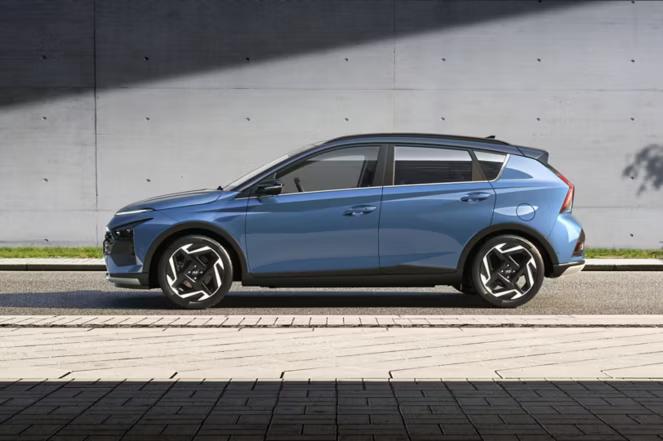
This is the big question, isn’t it? Based on its positioning, the Hyundai Bayon price in India is expected to start somewhere in the Rs 10–13 lakh range (ex-showroom). Some estimates put the base variant closer to Rs 10 lakh, with the fully-loaded trim potentially touching Rs 14-15 lakh.
That bracket puts it squarely against the Maruti Suzuki Fronx, Toyota Taisor, Kia Sonet, and the outgoing Venue. But with the Bayon sitting above the next-gen Venue in Hyundai’s own lineup, expect the differentiation to be clear — more space, more features, more premium feel.
On the powertrain front, expect a naturally aspirated petrol engine along with a factory-fitted CNG variant using a dual-cylinder setup — the kind that doesn’t eat into your boot space. The new 1.2-litre turbocharged petrol engine, which Hyundai is developing specifically for India, may also find its way in. It’s built to slot between the 1.0T and 1.5T currently on offer, and is reportedly hybrid-ready for future use. A diesel is almost certainly off the table.
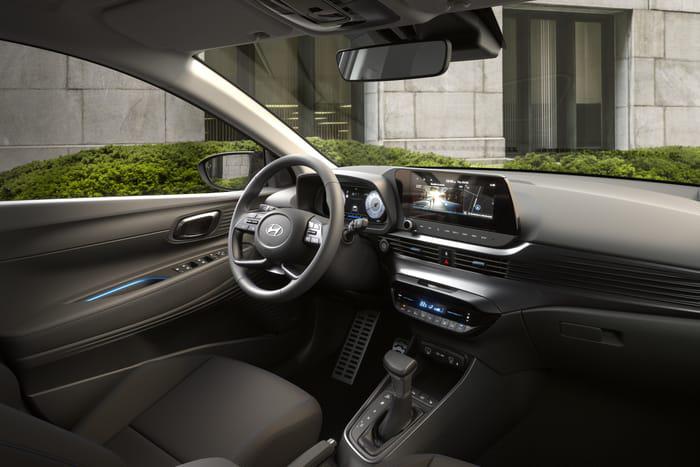
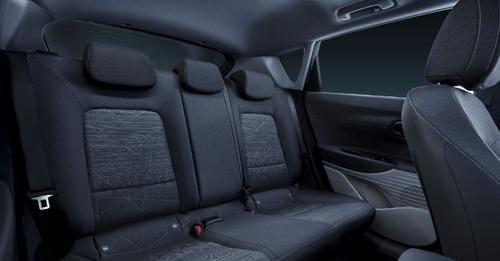
Features? Think modern Hyundai — a 10.25-inch touchscreen, wireless Android Auto and Apple CarPlay, Level 2 ADAS, connected car tech, ambient lighting, and possibly an N Line variant for those who like their SUVs a little spicier. The design reportedly carries Hyundai’s latest “Sensuous Sportiness” language — a boxy yet sharp silhouette with split headlamps, connected taillamps, and a full-width front design element similar to the Kona.
Now, the Big One — A Hyundai Electric SUV for India, Built in India
Here’s where things get seriously interesting for the Hyundai electric SUV India conversation.
Codenamed HE1i, this is Hyundai’s direct answer to the Tata Nexon EV — and it’s been designed, engineered, and will be manufactured right here in India. The production will happen at Hyundai’s Sriperumbudur facility in Tamil Nadu, and it will use localised batteries from Exide. That last bit matters a lot, because it directly affects pricing and after-sales peace of mind.
The Hyundai compact electric SUV rides on the E-GMP (K) platform — the same architecture that underpins the Hyundai Inster EV sold in global markets (and a cousin to the platform on the Kia Syros EV). This isn’t some cobbled-together conversion job; it’s a ground-up EV platform. For Indian buyers, that’s reassuring.
Also read: India’s Most Value-for-Money Sedan? 33.73 KM Mileage, Sunroof & 6 Airbags Explained!
Hyundai has confirmed that it’ll come in standard and long-range variants. Using the international Inster as a reference point, expect battery options in the 42kWh–49kWh range, with WLTP-tested ranges of 300 km to 355 km. But given that ARAI conditions are more generous than WLTP, the India-spec range numbers could potentially reach closer to 450–500 km for the long-range version. Don’t hold us to that, but the chatter is optimistic.
The SUV was also recently spotted testing on Indian roads parked right next to a Tata Nexon EV — and the two are remarkably similar in footprint. Boxy profile, flat roofline, roof rails, sharp LED taillamps — it looks like Hyundai has studied the Nexon EV very carefully. Smart move, because Nexon EV buyers are a loyal but vocal bunch. You need to earn their attention.
Hyundai Electric Compact SUV vs Tata Nexon EV — Who Has the Edge?
Alright, let’s address the elephant in the room. The Hyundai electric compact SUV vs Tata Nexon EV comparison is what everyone is really here for.
Tata Nexon EV currently starts at approximately Rs 12.49 lakh and goes up to around Rs 17 lakh for the top trims. It has an established charging ecosystem, a well-loved design, and a proven track record — especially after the recent software updates and the facelift. For a lot of Indian families, the Nexon EV is simply “the EV you buy.”
Hyundai’s HE1i, when it arrives, is expected to be priced starting around Rs 13–14 lakh (aggressively positioned to compete, with higher trims likely going up to Rs 17-18 lakh). The Exide battery partnership and local manufacturing should help keep prices from going completely north.
Where Hyundai might genuinely shake things up:
- Brand perception: Let’s be real — Hyundai’s build quality and feature-to-price ratio has always been a strong selling point. A Hyundai EV interior will almost certainly feel more premium than a comparable Nexon EV.
- E-GMP platform credibility: The same platform underpins the Ioniq 5. Indian buyers who’ve been eyeing an EV but were worried about long-term reliability will find that reassuring.
- After-sales network: Hyundai has one of the deepest service networks in India. That’s not nothing.
But Tata isn’t going to sit still. The next-gen Nexon (codenamed ‘Garud’) is reportedly in the works for 2027 too. So this isn’t going to be a one-punch knockout — it’s going to be a sustained fight, and Indian buyers win either way.
Why This Matters Beyond Just Two New Cars
Hyundai’s double-barrel announcement is really a signal about the direction the market is heading. The Rs 10–18 lakh segment is now the hottest battleground in Indian automotive history. Every major brand — Tata, Maruti, Hyundai, Kia, Mahindra — is fighting for the same buyer.
What makes the Hyundai play interesting is the intentionality of it. By placing the Bayon between the Venue and Creta, and pushing the Creta more upmarket (a next-gen Creta with hybrid tech is reportedly coming in 2027), Hyundai is essentially rebuilding its entire mid-segment portfolio from scratch. And by localising the HE1i EV for India-specific conditions and price points, they’re not just playing catch-up — they’re making a genuine long-term commitment to EVs in India.
Tarun Garg himself called these two launches “powerful catalysts for the brand’s next growth phase.” That’s careful corporate speak for: we’re taking this very seriously.
Also read: Ather EL01 Spotted Testing – Is This India’s Next Best-Selling EV Scooter?
FAQs
What is the expected Hyundai Bayon India launch date?
Based on multiple reports and Hyundai India’s own FY2027 guidance, the Bayon-based SUV (BC4i) is expected to launch in India before March 2027, with some estimates pointing to the second half of 2026.
What engine options will the Hyundai Bayon India get?
Expect a naturally aspirated petrol, a CNG variant (with dual-cylinder setup), and possibly the all-new 1.2-litre turbocharged petrol engine Hyundai is developing specifically for India. A diesel is not expected.
What platform will Hyundai’s compact electric SUV use?
The HE1i will ride on Hyundai’s E-GMP (K) platform — the same used in the Hyundai Inster globally and related to the Kia Syros EV platform.
How does the Hyundai electric compact SUV compare to the Tata Nexon EV in range?
The HE1i is expected to offer 300–355 km on WLTP-tested conditions, with India-spec ARAI figures potentially closer to 450–500 km for the long-range variant. The current Nexon EV offers up to around 465 km (ARAI). So on paper, they’ll be neck and neck — which is exactly the competition Indian EV buyers deserve.
Where will Hyundai’s new electric compact SUV be manufactured?
The HE1i will be made at Hyundai’s Sriperumbudur factory in Tamil Nadu with locally sourced Exide batteries — a strategic move to keep pricing competitive and reduce import dependency.
Is the Hyundai Bayon the same as the European Bayon?
Not exactly. The India-spec BC4i draws inspiration from the European Bayon’s platform and design language but is tailored for Indian market conditions — with a bigger footprint (around 4.18 metres), CNG option, and India-specific engine choices.