Hyundai Inster EV: Affordable Electric Innovation for Everyday Drivers
Let’s be honest — every time a new electric car launches, the first thing most of us do is scroll straight to the price. And that reaction makes complete sense, especially in a market like India where value is everything and range anxiety is still very real. So when Hyundai quietly started generating buzz around the Inster EV, the automotive community paid attention. Not just because it carries the Hyundai badge, but because on paper, this little machine looks like it could genuinely shake things up.
The Hyundai Inster EV is not trying to be the flashiest car in the room. It’s trying to be the smartest one — and there’s a difference.
What Exactly Is the Hyundai Inster EV?
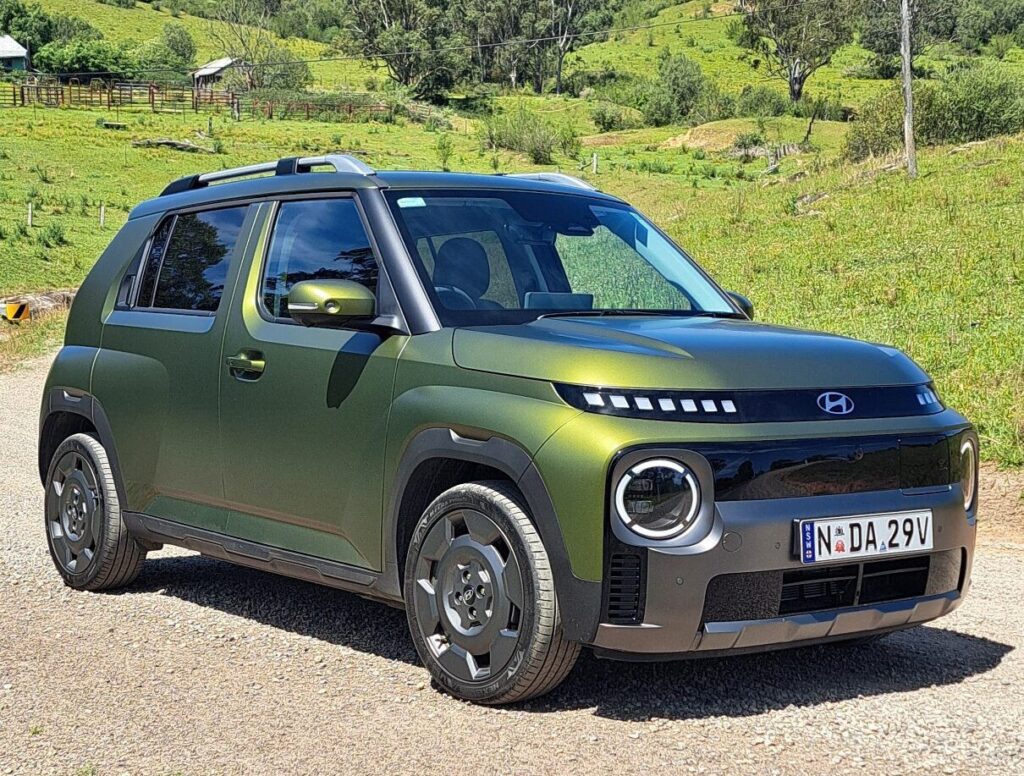
Think of it as Hyundai’s way of saying: “Electric mobility shouldn’t be a privilege.” Built on an A-segment platform — that’s the compact city-car category — the Inster is essentially the global avatar of the Hyundai Casper Electric that’s already doing well in South Korea. Same bones, slightly different name, and a whole lot of promise for markets that desperately need affordable, practical EVs.
It sits between a traditional city hatchback and a sub-compact crossover. The design is boxy in a charming way — almost reminds you of a grown-up toy car — with pixel-style LED DRLs borrowed straight from the Ioniq 5. For a small car, it carries itself with surprising confidence on the road.
Hyundai Inster Range: Will It Actually Get You Through the Week?
This is where the Inster EV makes a genuinely strong case for itself. You get two battery options — a 42 kWh pack that delivers around 327 km of range (WLTP), and a larger 49 kWh unit that pushes it to approximately 370 km. For Indian driving conditions — think stop-and-go city traffic, air conditioning running constantly, and the occasional highway run — real-world range would realistically fall somewhere between 270–310 km depending on the variant.
That’s honestly more than enough for the average urban commuter. If you’re doing 40–60 km a day, you’re looking at charging this thing maybe twice a week. And with support for 120 kW DC fast charging, you’re back to 80% in roughly 30 minutes. That’s a lunch break, not an ordeal.
The Hyundai Inster range story is compelling precisely because it doesn’t over-promise. It gives you enough — and in the EV world, enough is often the sweet spot.
Also read: Skoda Epiq 2026: The Affordable Electric SUV We’ve Been Waiting For
Hyundai Inster Price in India: The Number Everyone’s Waiting For
Here’s where things get interesting. Globally, the Inster is priced around £23,000–£27,000 in the UK (roughly ₹25–30 lakh at current rates). Now, that sounds steep — but once Hyundai localises production or brings it in as a CBU/CKD for India, expect that number to look quite different.
Industry insiders are optimistically pegging the Hyundai Inster price in India somewhere in the ₹12–16 lakh range if assembled locally — which would make it one of the most disruptive entries in the affordable EV space. That’s a segment currently dominated by the Tata Punch EV and the MG Comet, and honestly, neither of those offers the kind of feature-to-price ratio that the Inster appears to bring.
No official confirmation yet from Hyundai India, but the signals are encouraging.
Best Small Electric Car in India in 2026 — Does the Inster Deserve That Title?

That’s a big claim, so let’s break it down fairly. The competition in 2026 is fierce. The Tata Punch EV is a strong, trusted product. The Citroen eC3 has carved out a niche. The BYD Dolphin is competitively priced. And homegrown players like Ola Electric are expanding their portfolio aggressively.
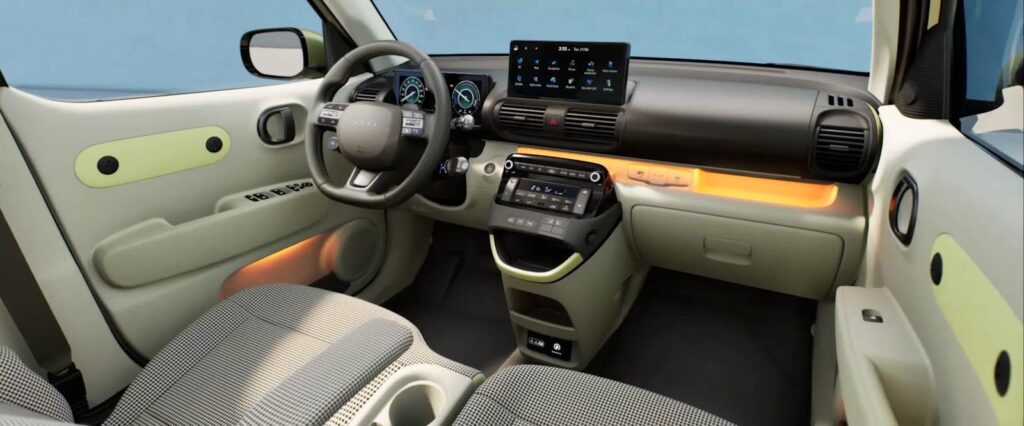
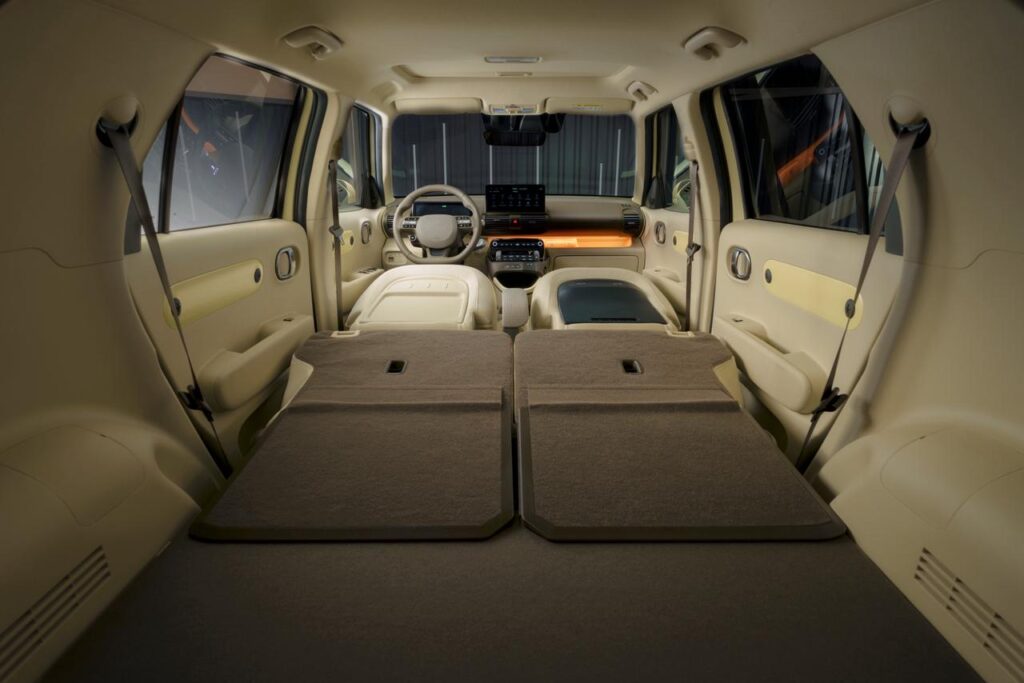
But the Inster brings something most rivals don’t — a combination of Hyundai’s proven EV expertise, a genuinely premium interior feel (dual 10.25-inch screens, wireless charging, a heat pump as standard), and a design that doesn’t scream “budget compromise.”
For someone looking at the best small electric car in India that feels like a proper car — not a glorified golf cart — the Inster is a very serious contender. The only real question is timing and pricing, both of which Hyundai India controls.
Why the Inster Matters for Affordable Electric Car Buyers in 2026
The affordable electric car 2026 narrative in India is shifting fast. Buyers are no longer willing to accept poor build quality or pathetic feature lists just because a car happens to run on electricity. They want value, and they want it to feel aspirational — even at a modest budget.
The Inster threads that needle well. It’s got the Hyundai reliability pedigree, a feature list that embarrasses cars twice its price, and enough real-world range to make petrol feel like a chore rather than a comfort. If Hyundai prices it aggressively for India, this could easily become the car that finally convinces the fence-sitters to make the switch.
FAQs
Is the Hyundai Inster EV launching in India?
Hyundai hasn’t made an official announcement yet, but given the Inster’s global success and India’s growing EV appetite, a launch within 2025–2026 is widely expected.
What is the expected Hyundai Inster price in India?
If locally assembled, industry estimates suggest a price band of ₹12–16 lakh. A CBU import would be significantly higher.
How much range does the Hyundai Inster offer?
The Inster offers 327 km (42 kWh) and 370 km (49 kWh) on the WLTP cycle. Indian real-world range would likely be 270–310 km.
How fast does the Hyundai Inster charge?
With 120 kW DC fast charging, it can charge from 10% to 80% in around 30 minutes.
How does the Inster compare to the Tata Punch EV?
Both are strong contenders, but the Inster has a more premium interior, a longer certified range, and Hyundai’s global EV know-how. Pricing will be the deciding factor once it launches in India.
Is the Hyundai Inster Electric the same as the Hyundai Casper Electric?
Yes, essentially. The Casper Electric is sold in South Korea; the Inster is its international identity. Same platform, same powertrain, different badging.