Hyundai Verna 2026 Facelift Launched At Rs. 10.98 Lakh
Sedans are supposed to be dead in India. Every market report says so. Every sales chart tells the same story — SUVs up, sedans down, and the compact sedan market quietly shrinking year after year while crossovers eat its lunch.
And yet here’s the Hyundai Verna 2026, launching on March 9, 2026, with over 25 updates, a dashcam as standard equipment, 7 airbags, a first-in-segment electric walk-in device for the front passenger, and a starting price of ₹10.98 lakh. Hyundai didn’t get the memo about sedans dying. Or maybe they read it and decided to prove it wrong anyway.
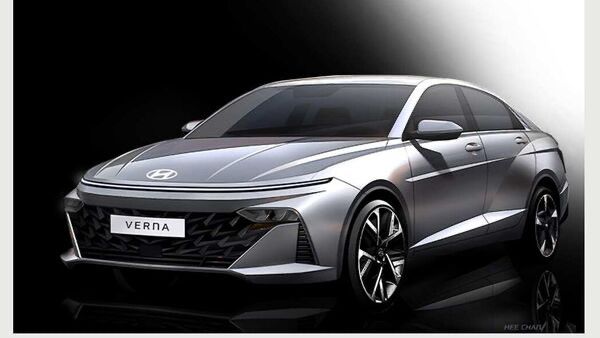
This isn’t a token refresh. The 2026 Verna has been genuinely upgraded — more features, sharper safety credentials, and a cabin that finally catches up with what buyers in this price bracket have been asking for. Whether that’s enough to reverse the sedan segment’s fortunes is a bigger question. But as a product, this is a considerably stronger proposition than the pre-facelift Verna was.
Hyundai Verna Price in India: Six Variants, One Clear Sweet Spot
The Hyundai Verna price in India starts at ₹10.98 lakh (ex-showroom) and climbs to ₹18.40 lakh for the top-spec HX10 Turbo DCT with dual-tone paint. Hyundai has introduced a new variant nomenclature with this update — HX2, HX4, HX6, HX6 Plus, HX8, and HX10 — replacing the older S, SX, SX(O) naming system that buyers had just about gotten used to.
Here’s the full variant-wise price breakdown:
| Variant | Engine | Transmission | Ex-Showroom Price |
|---|---|---|---|
| HX2 | 1.5L NA Petrol (113 hp) | 6-speed MT | ₹10.98 lakh |
| HX4 | 1.5L NA Petrol (113 hp) | 6-speed MT / IVT | ₹12.49–₹13.49 lakh |
| HX6 | 1.5L Turbo Petrol (160 PS) | 6-speed MT | ₹14.99 lakh |
| HX6 Plus | 1.5L Turbo Petrol (160 PS) | 6-speed MT / 7-speed DCT | ₹15.99–₹16.99 lakh |
| HX8 | 1.5L Turbo Petrol (160 PS) | 7-speed DCT | ₹17.49 lakh |
| HX10 | 1.5L Turbo Petrol (160 PS) | 7-speed DCT | ₹18.40 lakh |
The sweet spot — and most Verna buyers know this instinctively — sits around the HX6 Plus turbo DCT at ₹16.99 lakh. It gets you the turbo engine, the dual-clutch automatic, most of the premium features, and stops just short of the HX8/HX10 pricing where the marginal upgrades feel harder to justify. But for buyers who want everything Hyundai is offering, the HX10 is the one to get — and we’ll get to exactly what that means in a moment.
Also read: Hyundai Venue 2026: A Big Step Forward in the Compact SUV Segment
Hyundai Verna Facelift Features: 25+ Updates That Actually Matter
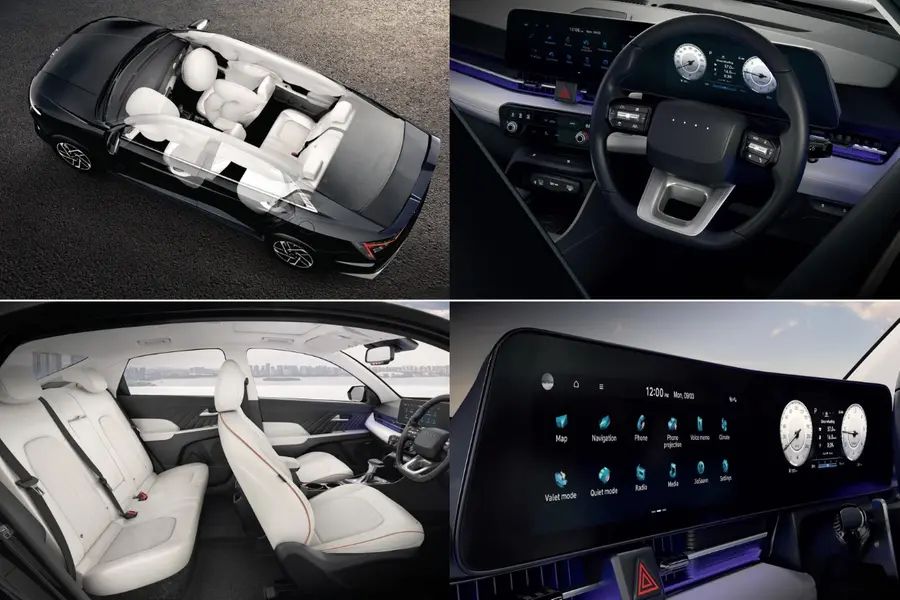
The Hyundai Verna facelift features story is more substantive than a typical mid-cycle refresh. Hyundai claims 25+ enhancements across design, technology, comfort, and safety — and unlike most manufacturer claims, this one is reasonably honest.
On the outside: a redesigned front bumper, a new black chrome radiator grille, revised dual LED projector headlamps, and a new set of 16-inch diamond-cut alloy wheels that look considerably fresher than what was on the old car. Two new colour options join the palette — Classy Blue and Titan Grey Matte — the latter being a matte finish option that’s quite rare at this price point. The body is now 30mm longer than the previous generation, though dimensions remain conservative at 4,565mm in length.
Inside is where the facelift makes its real argument. The cabin gets a driver-oriented cockpit with a D-cut steering wheel, an 8-way electrically adjustable driver’s seat with memory and a welcome retract function — meaning the seat moves back automatically when you open the door and returns to your saved position when you start the car. That’s a feature you typically find in cars costing twice as much.
The front passenger seat gets a 4-way electric adjustment with a first-in-segment electric walk-in device — making it easier to access the rear seats without the passenger having to manually move their seat. Again, not a feature you’d expect at ₹17–18 lakh.
Then there’s the dashcam. Standard. Built-in. Part of the surround view monitor suite. Hyundai has made this a talking point in their marketing, and rightfully so — it’s genuinely useful and most cars in this segment leave buyers to fit an aftermarket unit themselves.
Bose 8-speaker audio system, dual 10.25-inch displays (one infotainment, one driver’s instrument cluster), wireless Android Auto and Apple CarPlay, wireless charging, electric sunroof, TPMS, and an updated Level 2 ADAS suite with more than 75 safety features. That last number is the one that stands out — 75+ safety features, including automatic emergency braking, adaptive cruise control, lane-keeping assist, blind-spot monitoring, and rear cross-traffic alert. The 528-litre boot is the largest in the segment.
Hyundai Verna Turbo Engine Specs: Still the Most Powerful Sedan Under ₹20 Lakh?
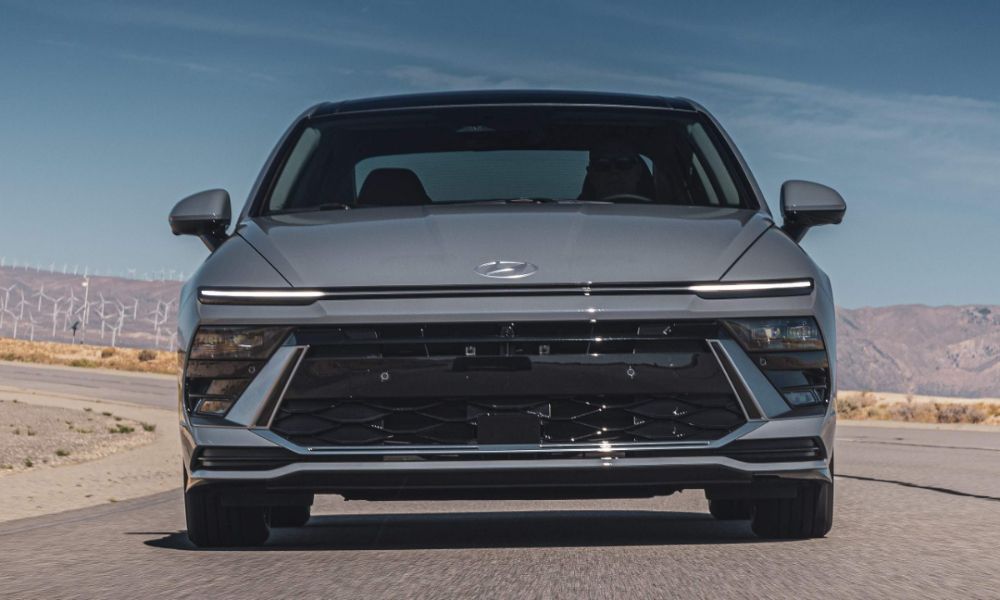
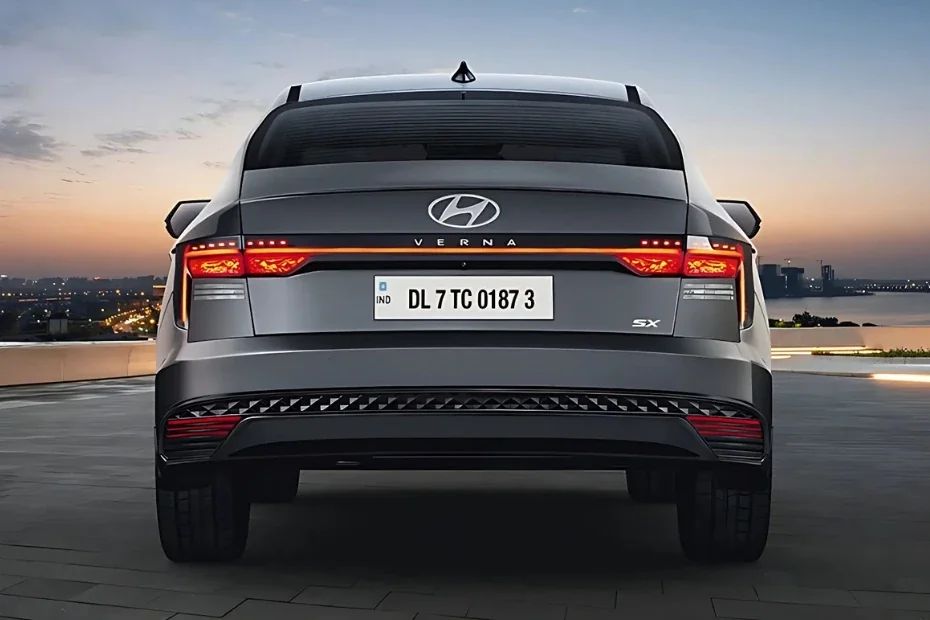
The Hyundai Verna turbo engine specs haven’t changed — and that’s actually a strength rather than a weakness. The 1.5-litre turbocharged GDi petrol engine produces 160 PS and 253 Nm of torque. In a segment where the Honda City’s 1.5-litre NA makes 121 PS and the Volkswagen Virtus 1.0 TSI makes 115 PS, the Verna’s turbo output is meaningfully ahead.
The 7-speed dual-clutch automatic paired with the turbo motor is the combination most buyers are after, and for good reason. It’s responsive, relatively smooth for a DCT, and makes the Verna genuinely quick in a way that mid-size sedans in India rarely are. The 0-100 kmph time is in the low 8-second range — a figure you’d usually have to move into hot-hatch territory to match.
The naturally aspirated 1.5-litre option (113 hp, 148 Nm) is available for buyers who want the Verna nameplate without the turbo premium. It’s paired with a 6-speed manual or an IVT automatic, and while it lacks the turbo’s excitement, it’s smoother and more relaxed in daily city driving.
Both engines get drive modes — Eco, Normal, and Sport — along with Idle Stop & Go (ISG) for improved fuel efficiency in traffic. ARAI-rated efficiency for the turbo DCT is 18 kmpl; the NA petrol returns up to 18.45 kmpl under test conditions.
Also read: Best Electric Cars Under ₹20 Lakh in India 2026
Hyundai Verna HX10 Variant India: Is the Top Spec Worth It?
The Hyundai Verna HX10 variant India is the fully loaded, nothing-left-out version of the facelift — and at ₹18.40 lakh (ex-showroom), it’s asking a significant premium over the HX6 Plus.
What you get for that extra spend: the Bose 8-speaker audio, the surround view monitor with the integrated dashcam, the driver seat memory function with welcome retract, the electric walk-in passenger seat, the dual-tone exterior paint option, the blind spot view monitor on the ORVMs, and the complete Level 2 ADAS suite. The HX10 also gets disc brakes all around — a safety specification detail that’s worth noting, since the lower variants use drums at the rear.
Is it worth ₹18.40 lakh? The honest answer is: compared to what? Against the HX8 at ₹17.49 lakh, the incremental upgrades are a matter of personal priority. But compare the HX10 Verna to what ₹18–19 lakh buys you in the SUV world — a Kia Seltos HTX, a Hyundai Creta HTX — and the Verna’s feature density actually looks favourable. You give up the SUV stance and the ground clearance. You gain a wider cabin, a bigger boot, sharper dynamics, and in the Verna’s specific case, more standard safety technology than most crossovers in this range.
Hyundai Verna vs Honda City: India’s Most Loyal Rivalry
The Hyundai Verna vs Honda City comparison has been running for over a decade — and the 2026 facelift gives the Verna its strongest ever position in this battle.
The Honda City remains a compelling car. The 1.5-litre NA petrol is smooth and refined. The cabin is spacious. The build quality feels solid. And Honda’s service network — particularly in tier-2 and tier-3 cities — is among the most trusted in India. For buyers who prioritise peace of mind over feature lists, the City is a consistently rational choice.
But the Verna now wins on almost every measurable metric. More power (160 PS turbo vs 121 PS NA on the City’s petrol). More safety features (75+ vs the City’s comparatively modest suite). More cabin technology (8-way electric driver seat with memory, dashcam, Bose audio — none of which the City offers at this price). Bigger boot (528L vs the City’s 506L).
The City does offer a strong hybrid option — a 1.5L petrol-electric system producing 126 PS that returns approximately 26 kmpl under test conditions. The Verna has no hybrid. For buyers where fuel efficiency is the primary consideration, especially those doing high mileage, that hybrid advantage is genuine and significant.
Where the Verna struggles relative to the City is where it always has — the perception of long-term Hyundai resale value versus Honda’s, and the brand preference argument that’s impossible to quantify but very real in Indian buying decisions. The City is the safer choice. The Verna is the more exciting one.
Also read: Mini Fortuner India 2026 – A Cheaper Alternative to the Toyota Fortuner?
FAQs
When was the Hyundai Verna 2026 facelift launched in India?
Hyundai launched the 2026 Verna facelift on March 9, 2026, with bookings open and deliveries expected shortly after.
What is the Hyundai Verna turbo engine output?
The 1.5-litre turbo GDi petrol produces 160 PS and 253 Nm of torque, making it the most powerful engine in the mid-size sedan segment. It’s available with a 6-speed manual or 7-speed DCT automatic.
Is the Hyundai Verna 2026 better than the Honda City?
The Verna wins on power, features, safety technology, and boot space. The Honda City wins on hybrid efficiency, perceived reliability, and Honda’s service network depth. The better car depends on what you prioritise.
Does the Hyundai Verna 2026 get a sunroof?
Yes — an electric sunroof is available on HX6 and above variants.